














Ad Targeting
July 2026
You're Running Ads Where People Scroll.
WRITTEN BY

Bhargav Pandya
Senior AVP – Digital

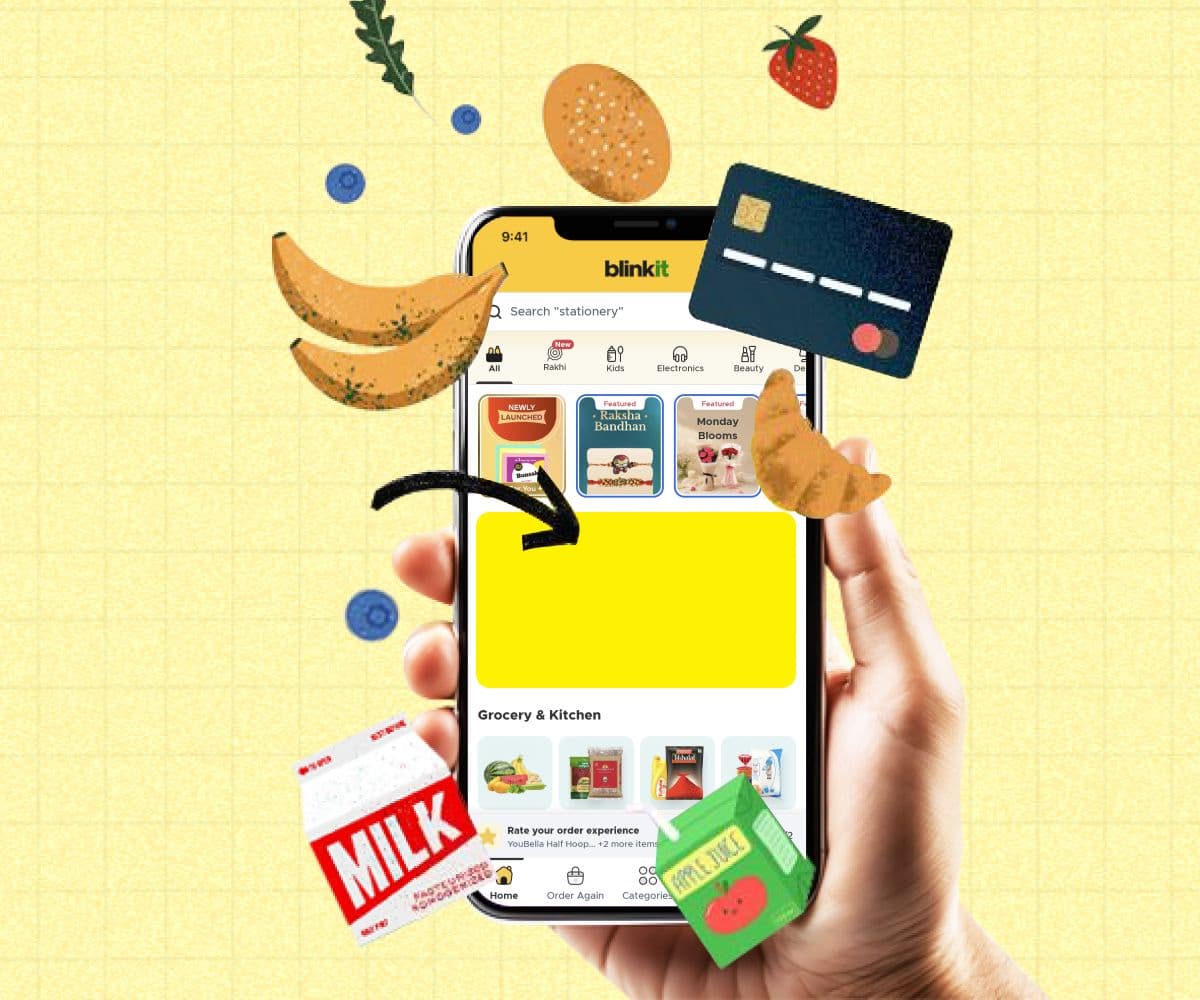
Most brands still pour 90% of their digital spends into platforms where consumers scroll past their ads between reels and DMs. Meanwhile, India’s quick commerce platforms — where consumers are actively shopping with their wallets open — have quietly built full-blown media ecosystems that barely feature on most media plans. Blinkit ads and Zepto ads now offer search placements, category takeovers, and sponsored listings served at the exact moment of purchase, backed by first-party purchase data and near-closed-loop attribution that Google and Meta cannot match.
Zepto’s advertising revenue surged from ₹49 crore in FY24 to over ₹1,636 crore in FY26 — a 33x jump in two years. Combined ad revenue across India’s top quick commerce players is projected to cross ₹4,900 crore by end of 2026. The attention has moved to the checkout screen. The ad money hasn’t followed. This piece breaks down why Q-Commerce advertising demands a fundamentally different playbook, what serious execution looks like at the SKU and pin-code level, and why most brands and agencies are still treating the biggest shift in Indian retail media as a test budget.
It’s 11 PM on a weeknight. I’m on Blinkit, ordering cold coffee and chips because the fridge is — as it reliably is at this hour — empty. Between the search bar and the checkout screen, I count four sponsored placements. A protein bar brand I have never tried sits right above the product I actually searched for. A D2C snack brand has taken over the category banner. And as I wait for my order — which will land at my door before I finish writing this paragraph — it hits me that I am staring at one of the most undervalued advertising platforms in the country.
Welcome to Q-Commerce advertising. And if your brand is still running 90% of its digital spends on Google and Meta, we should talk.
The 10-Minute Aisle Is Now a Media Channel
India’s quick commerce market has done something nobody fully anticipated. Blinkit, Zepto, Swiggy Instamart — these platforms started as logistics plays. Get the product to the customer faster than anyone else, figure out the business model later. That was the pitch. But somewhere between the ₹99 free delivery thresholds and the 8-minute delivery promises, these companies built something far more valuable than a supply chain. They built attention. Captive, high-intent, wallet-open attention. And then they monetised it.
Blinkit ads today include search ads, display banners, category takeovers, and sponsored product placements — all served through Brand Central, their self-serve ad platform. Zepto ads have scaled at an almost absurd pace: ad revenue jumped from ₹49 crore in FY24 to ₹1,636 crore in FY26. That is a 33x explosion in two years. Industry estimates suggest combined ad revenue across India’s top quick commerce players will cross ₹4,900 crore by end of 2026. India’s broader retail media market is on track to hit ₹30,360 crore this year — roughly 15% of the country’s total advertising spend. That is not a trend. That is a structural shift.
Your consumer has their wallet out and is actively shopping. Your brand is either visible at that moment, or it simply isn’t.
Why This Is Not Just Another Digital Channel
Here is what makes Q-Commerce fundamentally different from the platforms we have spent the last decade mastering. On Google, you capture intent after the consumer has already decided they want something. On Meta, you manufacture interest in a feed competing with reels, stories, DMs, and the general chaos of social content. On Q-Commerce, you intercept the consumer at the exact moment of purchase. There is no gap between intent and transaction. The consumer is not browsing. They are buying. The funnel is not a funnel — it is a single, compressed action.
Attribution is nearly closed-loop. When someone sees a Blinkit ad for a cold brew and adds it to cart eight seconds later, that is attribution clarity that Meta’s modelled conversions can only approximate. No view-through window debate. No multi-touch attribution model required. The ad showed up. The consumer bought the product.
The data is first-party and purchase-linked. Q-Commerce platforms do not know what people clicked on or how long they watched a video. They know what people actually paid money for. For any performance marketing agency managing serious digital spends, this is the kind of signal quality that makes optimisation genuinely meaningful rather than just directionally hopeful.
Nobody opens Zepto to browse. They open it to buy. Every session is a transaction waiting to happen.
Where Brands Keep Getting This Wrong
The biggest mistake I see brands make with Q-Commerce advertising is treating it like a checkbox. They allocate a small test budget to Blinkit ads, run a few sponsored product listings for a quarter, see modest results, and conclude that the platform is “not mature enough.” That is not a strategy. That is a self-fulfilling prophecy dressed up as a test.
Here is what I have seen from the campaigns we manage: the brands winning on Q-Commerce are the ones thinking about digital shelf placement the way FMCG has obsessed over physical shelf space in modern trade for decades. They are investing in category-level visibility, not just individual SKU promotion. They are bidding on adjacent categories. They are running sustained, always-on campaigns that build habitual visibility, not one-off bursts that spike and fade.
The brands struggling? They are copy-pasting their Meta creative onto a 300x250 banner and wondering why the click-through rate is underwhelming. Q-Commerce ad creative needs to be utility-first. The consumer here does not want to be inspired. They want the price, the weight, and why this product deserves a spot in their next 10-minute delivery. That is a different creative brief, and most brand teams have not written it yet.
And then there is the competitive blind spot. Most brands on Q-Commerce are not monitoring who is bidding on their own brand keywords. On Google, brand defense is table stakes. On Blinkit and Zepto, most brands have not even checked. Competitors are bidding on your brand terms, showing up above your own SKUs in search, and intercepting purchase intent that was already yours. If you are not running brand defense, generic conquesting, and competitor interception as three distinct keyword strategies, you are handing revenue to whoever is.
What Serious Q-Commerce Execution Actually Looks Like
The gap between “running Blinkit ads” and running Q-Commerce properly is enormous.
Most brands set a daily budget, pick some keywords, and let the platform optimise. That is the Google Search playbook applied lazily to a fundamentally different environment.
It starts with campaign structures built at the category, SKU, and pin-code level — not broad keyword buckets. Budget needs to flow only to in-stock, high-velocity SKUs. Every rupee spent driving traffic to an out-of-stock listing is wasted, and the number of brands bleeding budget this way is staggering. Inventory-linked budget allocation alone recovers 10-15% of wasted spend in most accounts we have worked on.
Then there is day-parting — not the lazy kind where you increase bids during “peak hours.” Q-Commerce has distinct demand spikes that need separate bidding structures: morning health rushes, midday impulse snack orders, evening household restocking, and weekend browsing behaviour. Layer on separate budget logic for weekdays, weekends, and payday windows. Same budget, dramatically different ROAS when deployed against the right intent at the right hour.
And city-level strategy is non-negotiable. You cannot run the same bid logic in Mumbai that you run in Lucknow. Metro markets need aggressive top-slot dominance. Growth cities need controlled testing to find winning SKUs before you scale. Tier-2 markets demand efficiency-first bidding with strict performance gates.
If your agency cannot buy media where consumers are actually buying products, that is a capability gap worth closing.
The Agency Problem Nobody Wants to Talk About
I will be direct: most agencies, including well-established performance marketing agencies, had not built the operational muscle for Q-Commerce. And I include us in that self-reflection — until we decided to fix it.
We have spent a decade getting exceptionally good at Google’s auction mechanics and Meta’s campaign architecture. The playbooks, the bidding strategies, the reporting frameworks — everything is calibrated for two ecosystems. Q-Commerce requires a different skill set. The interfaces are still maturing. Data exports can be clunky. Support is nowhere near what Google or Meta offers.
But I have seen this pattern before. It is the same friction agencies felt when programmatic was new, when LinkedIn advertising was “too niche,” when Amazon Ads was dismissed as “just e-commerce.” The agencies that invested early captured disproportionate value for their clients.
At ting, we invested early because the numbers warranted it. We now run Q-Commerce campaigns across FMCG categories — frozen foods, snacks, beverages, personal care, pet nutrition — with dedicated teams doing competitor ad audits four times a day across all three platforms, tracking slot-level presence and keyword bidding behaviour in near real-time. Across these accounts, we are consistently seeing average ROAS of 8-12x, CPC reductions of 18-35% through bid suppression, and ROAS uplifts of 25-70% within the first 60-90 days of structured optimisation. When you are a performance marketing agency running campaigns across 30+ platforms, you develop a feel for where high-value attention is migrating. Right now, it is migrating to the checkout screen.
The Real Takeaway
Let me end with a number. Over 2,400 brands used Zepto’s advertising platform in FY26. That is not early-adopter territory. That is an ecosystem forming in real time.
Blinkit ads and Zepto ads are no longer experimental. They are structurally important components of any media plan involving FMCG, personal care, food and beverage, or household products. The platforms are investing aggressively in ad tech, the formats are maturing fast, and consumer behaviour is increasingly wired to the 10-minute delivery habit.
The question is not whether Q-Commerce advertising works. The question is whether you are building the muscle to capture consumer intent at the most transactional moment in their digital day — or still trying to do that with a carousel ad in a social feed where your consumer is watching cat videos.
I know where I would put the next rupee.
about the author
Bhargav Pandya
Senior AVP – Digital