













October 2026
Good design should make the next design easier
WRITTEN BY

Darshana Dhakan
Associate Creative Director - Design

A website rarely stays the same after launch. New pages, products, platforms and business requirements continuously add complexity. This is where a well-structured design system can make a significant difference. Drawing from real-world web design experience, this article explores how design systems translate brand guidelines into consistent digital experiences, simplify designer-developer collaboration and make websites easier to scale. It also looks at how design-system context is becoming increasingly valuable in AI-assisted design and development, helping teams adapt experiences faster while reducing generic or inconsistent outputs. From corporate websites to ecommerce website development, the focus is not on building an exhaustive library, but on creating the right system for the complexity a website actually needs and designing it to evolve.
A design system is often described as a collection of reusable UI components, typography, colours, icons and guidelines. But for a website, it can be much more than that. It becomes a shared language between brand, design and development—a framework that helps teams make faster decisions while keeping the experience consistent as the website grows.
For businesses and design teams, this matters because websites rarely stay static. New pages, products, campaigns, devices and technologies are constantly added. A good design system should then manage that complexity without letting it become visual or technical chaos.
More Than a UI Kit: Turning Brand Guidelines into Digital Behaviour
Before starting any web project, our first question to the project team is usually: “Where are the brand guidelines?” Developers tend to ask the next question: “Where is the style guide or design system?” Both questions are essentially looking for the same thing. Guardrails.
A brand guideline isn't just a logo, colours and fonts. It defines how a brand should behave across different applications. A design system takes that thinking from paper to pixels: typography, colour, spacing, grids, components, icons, motion, accessibility and interaction patterns, along with the rules for using them. Systems such as Apple's Human Interface Guidelines and Microsoft's Fluent demonstrate how shared principles, components and patterns can create consistency while still adapting to different platforms.
Start Small, Think Scale
I learnt the value of this the hard way. In 2016, as a junior designer, I worked on a 25-30 page website for a financial services company with multiple business verticals. We had a brand guideline with colours and fonts, but no documented components or design system. The same colours were interpreted differently across pages. When the client later wanted to change the secondary font, both design and development became difficult to test and update because neither side had a structured system to work with.
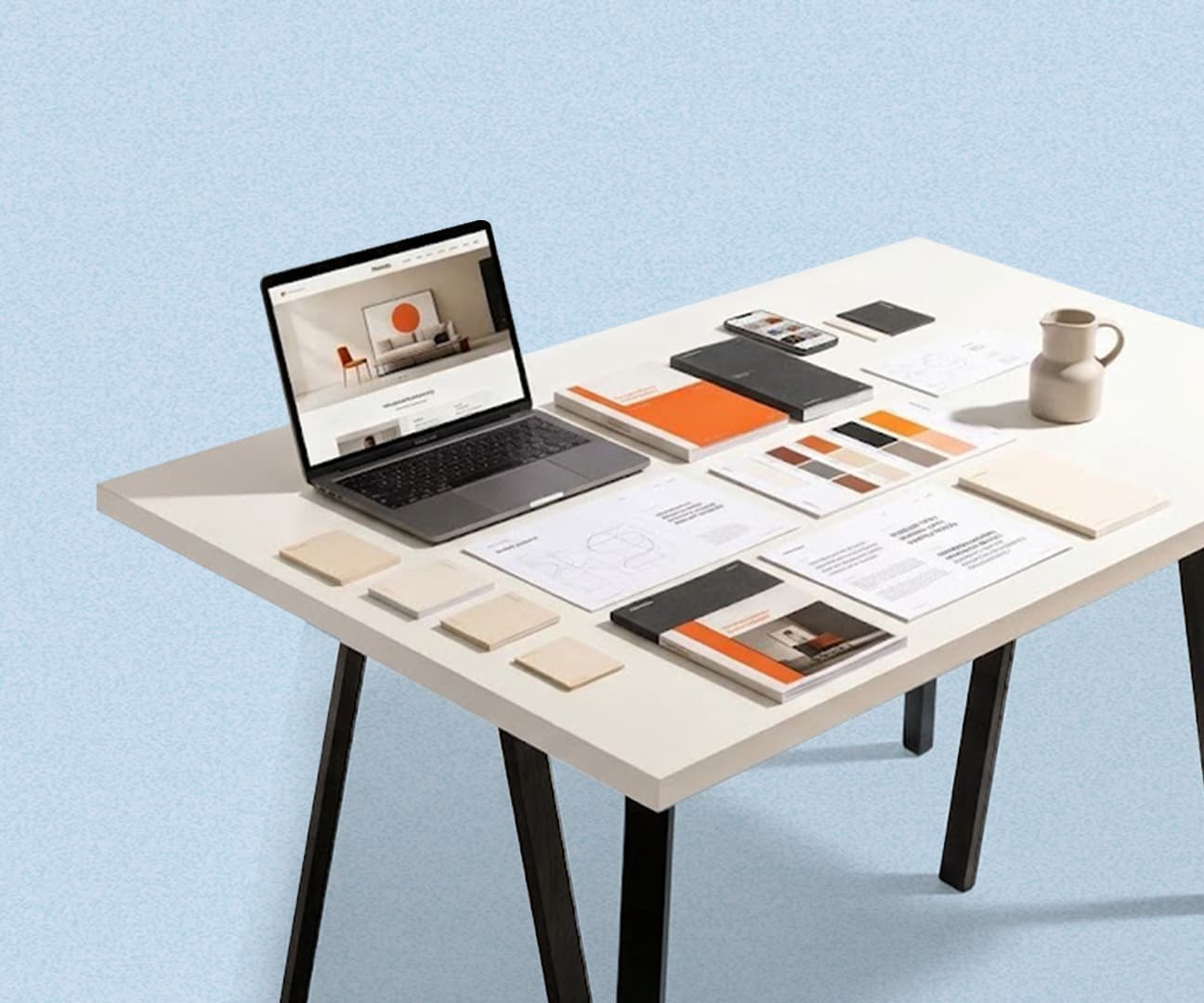
Almost a decade later, I worked on the same website again, this time leading the design for its brand refresh. We introduced a lightweight, website-specific design system rather than an exhaustive product-style library. Components, variables and patterns were defined early, making design and development handoff considerably smoother. Because much of the experience was component-based, new pages could be designed faster without reinventing decisions we had already made.
This is where scalability becomes practical. Whether you're working on ecommerce website development, a corporate website or a large content platform, the goal isn't to make everything identical. It is to make the right things consistent, so teams can spend their time solving new problems instead of repeatedly solving old ones.
Scalability is also about what happens after launch
Take ecommerce website development as an example. A website may launch today, but six months or a year later, the brand could introduce a new product and need a dedicated landing page or microsite to support its SEO and marketing efforts. With a design system in place, the developer doesn't necessarily have to wait for the designer to recreate every element. They already have the approved components, typography, colours, spacing and interaction patterns to work with. The designer can step in where a genuinely new experience is needed, while the rest can move forward independently.
That is where a design system creates value. It doesn't just make the initial website faster to build, it also reduces dependencies and makes the website easier to grow long after the original design team has moved on.
One brand, many experiences, and now, AI
A strong design system also helps a brand behave consistently beyond a single website. Think about how a user moves between a brand's website, mobile app, tablet or connected TV experience. The interface may need to adapt to the platform, but the underlying visual language and behaviours should still feel familiar.
The same principle is becoming increasingly relevant to AI-assisted design and development. AI can generate a UI from almost anything but without context, it can also produce something generic. Give it defined typography, colours, components, spacing and visual rules, and it has a much stronger framework to work within. This makes tasks such as adapting desktop designs to mobile, creating related pages or exploring variations significantly easier. Recent research into design-system-aware AI development found 46.7%-69.4% reductions in time-to-delivery in the tested environments, while Figma's recent work also positions design systems as an important foundation for AI-assisted workflows.
Does Every Website Need a Design System?
Not necessarily. A small, short-lived website probably doesn't need the same level of documentation as a global product ecosystem. The mistake often is treating a design system as an all-or-nothing exercise.
For websites, I believe the best approach is to build just enough systems to support the complexity you have and enough flexibility to support where you're going. It should be tested against real scenarios, refined as the website evolves and adapted as new platforms and technologies emerge. The system itself should never become a constraint; it should make better design decisions easier.
Ultimately, a design system is all about creating fewer unnecessary decisions. For businesses, that can mean greater consistency and easier scalability. For designers and developers, it means less repetition, smoother collaboration and faster execution. And when looking at the work of the best web design companies, the real differentiator isn't simply how a website looks on launch day, it is how intelligently that experience can continue to grow.
about the author
Darshana Dhakan
Associate Creative Director - Design