












CREATIVE STRATEGY
August 2026
Stop Blaming The Machine And Start Moving Human Beings
WRITTEN BY

Abhinav Daryapurkar
AVP - Strategy & Planning

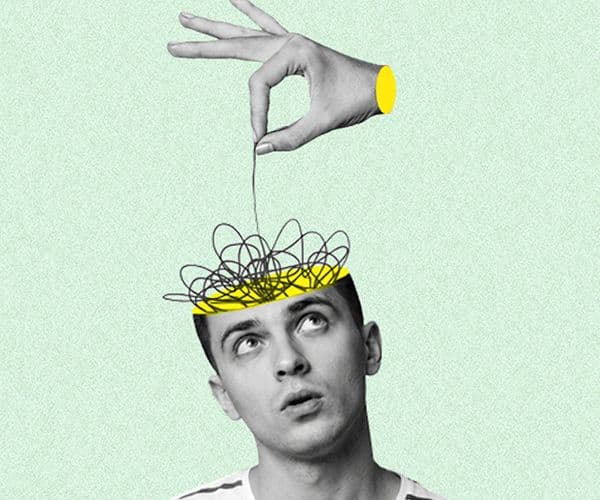
The era of the algorithmic 'Growth Hacker' who claims to possess secret keys to Meta and Google dashboards is officially over. With the widespread rollout of automation features like Meta’s Advantage+ and Google’s Performance Max, the technical media buying playing field has been completely leveled. Today, your competitors have access to the same dashboard horsepower and optimization tools that you do, meaning you can no longer out-optimize the machine through technical tweaks alone. Unfortunately, many modern brands still fall into the trap of allocating their whole strategy and planning budgets to managing distribution pipelines while treating the actual ad creative as an afterthought. This guide dismantles the dangerous illusion that paid media is purely a math problem. By shifting focus back to psychological truths and robust creative strategy, brands can transform their marketing from dry feature lists into irresistible storytelling. Stop wasting valuable time endlessly fixing your distribution pipes when the real issue lies with the quality of the water flowing through them. True competitive advantage belongs to agencies that prioritize human connection over basic dashboard metrics.
The Growth Hacking Myth
I’ve seen the word ‘Growth Hacker’ sprinkled on CVs, LinkedIn bios and agency vacancies like salt. Almost like a dashboard operator who has access to secret knobs in Meta and Google and can micro-target the lookalike audience of a one-handed golfer who is looking to buy a fake moustache.
They said that treating the ad as a mere vessel to carry a discount code is going to be enough.
“People who I am showing my ad to are anyway looking for a brand like us. Why would they not buy from us?”
For the longest time, brands were sold this illusion. There were two problems with this beautiful, comforting lie:
1. The role of the media planner expanded to understand audience psyche more than their stipulated role of handling money like a wizard
2. Brands began to copy what the largest spender in their competition set was doing
This turns marketing into a predictable maths problem. Strips the beauty of human behaviour from the art of advertising.
But that’s stale news. Meta’s Advantage+, Google’s PMax and all the other updates by advertising platforms have levelled the playing field for everyone, essentially meaning every brand has the same superpower that a Growth Hacker would have. Today, your competitor has access to the same exact dashboard horsepower as you do. You cannot out-optimize the machine.
Marketers have traditionally obsessed over dashboard metrics, allocated the largest chunk of strategy and planning to optimizing the money because of the sense of control it provides, often treating the creative and messaging as an afterthought. And it’s fair, I’d be terrified too, if the success of my campaign, using actual money would hinge on something as messy and unpredictable as human nature.
The job of the modern strategy and planning team is to marry the left and right brain thinking. It is to accept that the algorithm is smarter at finding people, but utterly useless at moving them emotionally. And therefore, if your foundational systems fail to take a crack at what’s moving your consumers emotionally, no amount of optimizing is going to help.
Creative is the new targeting.
The more I read about this, the more fascinating it becomes. ‘Creative’ is the only leverage that any brand now has. Which means that marketing has started to go back to what it always was - great storytelling. The algorithm is targeting people not just based on your settings, but also based on how people are interacting with your advertisement. Who is pausing to read the copy? Who is watching the video? Who is clicking on the link? All these are signals for algorithms to know who to target further.
Therefore, your creative strategy is your targeting mechanism.
If your ad is generic, it will be shown to a generic, broad audience. Nothing wrong with it. Depends on what you’re selling. But if your ad appeals to the basic human nature of your audience, it will perform better. It’s going to make sure that the media planner is happy, his rupee is working better.
If your version of creative strategy is to look at what your closest competitors are doing and copy the same with the logo changed to your brand’s, you’re setting your ad up for a failure and your media strategy team for a job change. A psychologically grounded creative strategy and setup acts as context for platforms. It attracts the correct buyer, repels the ones that might never buy from you, even after listing your category as their interest!
“The combination of impeccable human understanding and beautiful words and visuals is the winning formula.”
Understand Humans, Not Just Audiences.
Humans don’t make decisions based on features. Or lists. We make decisions based on emotion, and then justify them later with features and lists. Most ads read like brochures, “My product is 10% better than others’. Buy me!” It falls on deaf ears. There's a psychological tax your communication strategy will pay when every ad screams features, products, benefits, price. Today’s digital consumers have banner-blindness. Our brains are wired to filter out commercial pitches on platforms where ‘unboring’ is the objective.
This trap is even more evident in the paid social media landscape. Brands often treat social media ads as TV commercials shrunk down to fit a vertical screen. But you’re not competing with other brands, you're competing with a hilarious video of a cat troubling a dog, or someone falling from their chair, basically, entertainment. You can’t expect your users to treat your highly polished, salesy ad to be responded to with the same enthusiasm that the content your audiences’ friends are sending to them. It just doesn’t work.
That’s where creative strategy comes into play.
If your paid advertising is stalling, stop looking for answers in the ad dashboard. Look at your understanding of your audience and the communication strategy that has been deployed. Look at what you’re actually saying to the human being across the other side of the glass.
Win the game by investing your energy into what truly moves the needle: unmistakable, distinct, and psychologically irresistible creative messaging. Do this by understanding your audience, becoming your audience, knowing what they go through in their daily lives, what their pain points and desires are.
A creative strategy checklist
Understand what role your brand is playing in their lives. Follow a simple checklist:
Do I know who my consumers are beyond their demography?
Do I know what they are looking for and their pain points?
Are the words and visuals in my creative evocative enough to move them?
Am I using the correct kind of hooks? The kind that will stop them from scrolling?
Will a familiar face in my advertisement work? Is that how my brand’s essence is?
Are my media campaigns set up in a way that my creatives are doing the heavy-lifting? Or do I need to relook at my media sequencing?
Are my creatives following platform nuances? Or am I adopting a spray-and-pray model (Please don’t do this)
Allow the creative strategy the same amount of importance that a media strategy is being shown and you will see the results.
Stop fixing the pipes. Fix the water. The pipes will take care of themselves.
about the author
Abhinav Daryapurkar
AVP - Strategy & Planning